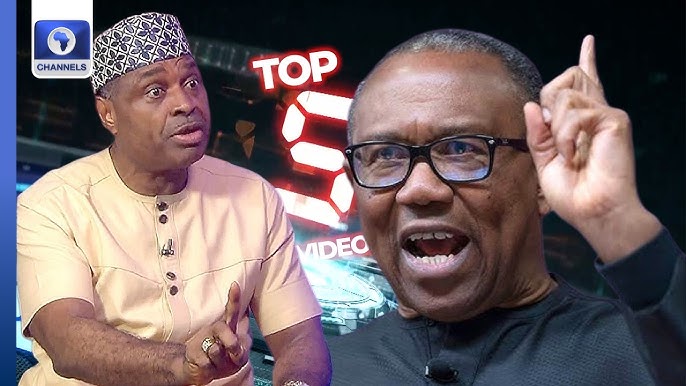
Former Labour Party campaign figure and African Democratic Congress (ADC) chieftain, Kenneth Okonkwo, has criticized the growing use of the slogan “Obi or nothing,” describing it as politically and culturally counterproductive, while warning that it could weaken Peter Obi’s support base in the South-East ahead of the 2027 general elections.
Okonkwo made the remarks during an interview on Channels Television on Thursday, where he argued that the phrase does not reflect the traditional values of the Igbo people.
“‘Obi or nothing’ is an abomination in Igbo land,” he said, insisting that the slogan promotes exclusion rather than unity.
He further explained that Igbo political philosophy encourages collective advancement rather than concentration of support around a single candidate. According to him, this principle is reflected in what he described as *Somadina*, a cultural idea emphasizing shared progress.
“Somadina means that I will not be the only person that will thrive. I will not be the only person that will succeed,” he stated.
Okonkwo also referenced Nigeria’s Second Republic politics, citing the 1979 presidential election and the late Nnamdi Azikiwe’s approach to national politics as an example of strategic cooperation. He argued that Azikiwe recognized the limitations of relying solely on regional voting strength and worked within broader alliances that ultimately improved South-East representation at the federal level.
He added that political messaging that excludes alternative choices risks reducing negotiation power for the region in future elections.
Beyond regional politics, Okonkwo also addressed recent political realignments involving Peter Obi and Rabiu Kwankwaso, alleging that their departure from a coalition arrangement was driven by reluctance to participate in internal party primaries.
“And the reason they went there is because they are scared of participating in primary election,” he said, while questioning the consistency of their earlier positions on coalition-building.
He further criticized the move, suggesting it contradicted earlier claims that the coalition was the most viable platform for defeating President Bola Tinubu in 2027.
Okonkwo also reflected on his own role in Obi’s 2023 presidential campaign, noting that he supported the bid out of a desire for a South-East presidency but later became disillusioned following the election outcome and subsequent legal processes.
He said he spent months in post-election litigation before eventually stepping away from the political movement.
His comments add to ongoing political debate around strategy, regional alignment, and coalition politics as parties and stakeholders position themselves ahead of the 2027 elections.